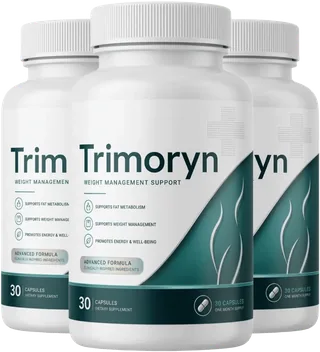
Trimoryn Capsules riboflavin 1470 refers to the percentage Daily Value printed beside 25 mg of riboflavin on the panel as printed in the brand's August 2026 press release. That figure matches the older 1.7 mg reference amount; by FDA's current 1.3 mg Daily Value, 25 mg comes to about 1,923 percent, our arithmetic. Neither number is a measure of benefit. This post shows the sums, why labels can differ, and what to check on the bottle you receive.
What does the 1470 figure on the panel mean?
It is the percent Daily Value the brand's release prints for riboflavin, the only one of the eleven ingredients that has a Daily Value at all. The release lists riboflavin (as vitamin B2) at 25 mg per capsule and 1470 percent DV.
Every other ingredient on the panel carries a dagger, which means a Daily Value is not established for it. FDA's labeling guide explains how panels list ingredients and amounts and use that dagger for ingredients without a Daily Value.1 We have not seen a photo of the real panel; our source is the release, which an earlier July 2026 release repeats line for line. Our supplement facts page walks through the whole table.
Why does 25 mg not equal 1470 percent today?
Because the percentage depends on the reference amount used, and the printed one is not FDA's current figure. FDA's current Daily Value for riboflavin is 1.3 mg.2 Dividing 25 by 1.3 gives about 1,923 percent; dividing 25 by 1.7 gives about 1470 percent.
| Reference amount | Sum | Result (our arithmetic) |
|---|---|---|
| 1.7 mg (older figure) | 25 ÷ 1.7 | about 1470 percent, matching the release |
| 1.3 mg (FDA's current DV) | 25 ÷ 1.3 | about 1,923 percent |
We cannot say why the release uses the older figure, and the brand has not explained it. It may be a leftover from an earlier label format. We are calm about this: the difference changes the percentage, not the 25 mg. If the bottle you receive prints something else, the bottle panel wins.
Can percentages differ between labels?
Yes, for reasons that usually have nothing to do with the milligrams. A percentage is only as current as the reference amount behind it, and FDA explains that the Daily Value is the benchmark for the percentage column on supplement panels.2 A label written against an older benchmark, or printed from an older template, can show a different percentage for the same amount.
So compare milligrams first. Milligrams do not move when the reference changes, and they let you add up riboflavin across products. Our riboflavin page has a calculator that does this sum; you add the B2 from a multivitamin or other products to the capsule's 25 mg.
What do official riboflavin facts say?
The NIH Office of Dietary Supplements says riboflavin is vitamin B2, that adult women need 1.1 mg a day and men 1.3 mg, and that the body can't absorb more than about 27 mg at one time.3 It adds that riboflavin has not been shown to cause harm and is not known to interact with medicines.
A very high percentage describes distance from a reference figure. It is not a quality score, and a bigger number does not mean a better product or a better result for anyone. The sheet gives no reason to treat percentage as an outcome, and we do not either. You should still tell your pharmacist or doctor what you take, because riboflavin is only one of eleven ingredients and the others carry cautions.
Does the percentage change how you use the capsule?
No. The brand's directions are one capsule daily, preferably 15 to 30 minutes before a meal, and not to exceed the recommended dose, whatever the percentage says. The percentage is a labeling detail, and it does not tell you how many capsules to take.
The release says the capsules are not for anyone under 18 or for pregnant or nursing women, and that anyone with a medical condition or on medication should consult a physician first. No study of the finished capsule is cited, so we make no claim about what the riboflavin does.
What should you check when the bottle arrives?
Check three things on the panel: the riboflavin amount, the percentage printed beside it, and the date and lot information on the base. Then compare them with this page and with the rest of the panel.
- Does the bottle read 25 mg of riboflavin per capsule?
- Does it print 1470 percent, about 1,923 percent, or another figure?
- Do the other ten entries and amounts match the release?
- Are the lot number and best-before date shown, as the owner's materials say they should be when the bottle prints them?
If anything differs, keep the bottle and photograph the panel. Then ask the order desk. The brand's release lists +1 (323) 391-7425 and [email protected], and the site owner's materials list +1 (302) 200-3480 and [email protected]; use the phone and email in your order confirmation. When you are ready, you can check the packs at the seller's checkout and read the live panel notes there, and our ingredients page has the full list.
Questions people ask
Why do Trimoryn Capsules show riboflavin at 1470 percent?
The release's figure matches 25 mg divided by an older 1.7 mg reference amount. FDA's current Daily Value is 1.3 mg, which gives about 1,923 percent, our arithmetic.
What riboflavin amount do Trimoryn Capsules list per capsule?
Trimoryn Capsules list 25 mg of riboflavin per capsule on the panel as printed in the brand's release, as vitamin B2. Compare it with the bottle you receive.
Is the Trimoryn Capsules riboflavin amount too high?
We cannot judge that for you. The NIH says the body can't absorb more than about 27 mg at one time and that riboflavin has not been shown to cause harm; ask your pharmacist about your full list.
Will my Trimoryn Capsules bottle say 1470 percent?
We have not seen a photo of the real panel, so we do not know. Check the bottle you receive, and ask the order desk if it differs from the release.
Sources for this page
- FDA: Dietary Supplement Labeling Guide, Chapter IV. Nutrition Labeling. www.fda.gov
- FDA: Daily Value on the Nutrition and Supplement Facts Labels. www.fda.gov
- NIH Office of Dietary Supplements: Riboflavin, Fact Sheet for Consumers. ods.od.nih.gov
These statements have not been evaluated by the Food and Drug Administration. This product is not intended to diagnose, treat, cure, or prevent any disease. Safety: Trimoryn Capsules are a dietary supplement, not a medicine. Adults 18+ only; one capsule a day and not more, with enough water. Not for pregnant or nursing women, and anyone who takes medicine or has a medical condition should ask a physician first. The panel lists berberine, alpha lipoic acid, resveratrol, mangosteen and turmeric, which can matter with transplant drugs, diabetes medicines, blood thinners, cancer treatment and drugs processed by liver enzymes, plus live probiotics, which call for caution with a weakened immune system. Ask your doctor or pharmacist first and never stop prescribed treatment. Trimoeryn is an independently run information site about Trimoryn Capsules; the owner states it is a USA Authorized Trimoryn Retailer. It is not the maker. We may earn money when you order through links marked as sponsored. The seller sets prices, shipping and refund terms; we show them as listed when we checked, so confirm at the live checkout.